

A centralised access point for health data in the Stockholm Region
The Centre for Health Data acts as ‘an extension of the researcher’, helping facilitate access to Region Stockholm's unique health data,” explains Heléne Spjuth. Recent developments in AI have led to an increase in the number of complex requests – which places greater demands on coordination.
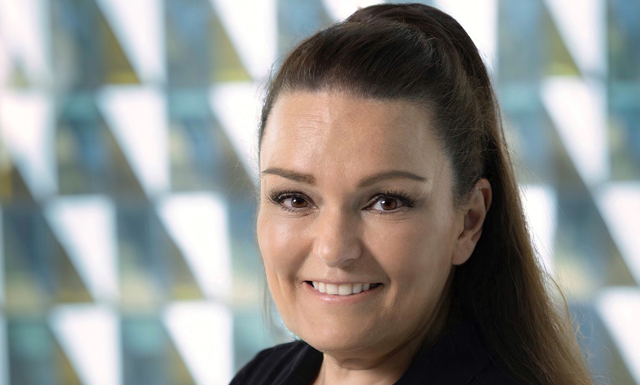
Instead of individual researchers having to contact various healthcare providers and administrative bodies themselves, we do it for them. We act as an extension of the researcher within the region.
The Centre for Health Data is an administrative unit within Region Stockholm, responsible for coordinating the disclosure of health data within the region. Its remit includes acting as a support function, both externally for researchers and external authorities, and within the region for healthcare providers and administrative bodies. The unit consists of two teams: an administrative team that handles applications, and a team of health data experts and analysts who work on method development and environmental scanning.
Since its launch in 2019, the Centre for Health Data has served as a point of access for researchers wishing to obtain data from at least two healthcare providers or data sources.
”Instead of individual researchers having to contact several different healthcare providers and administrative bodies, we do it for them. We act as an extension of the researcher within the region”, says Heléne Spjuth, Head of the Centre for Health Data, Region Stockholm.
A common misconception is that it is the staff at the Centre for Health Data who make decisions and provide the requested data. ”That is not the case,” she explains. “This particular function is purely administrative.”
Requested data sources
Around 60 applications are processed each year. Most of these, around 65 per cent, relate to requests for data from the VAL databases, Region Stockholm's central administrative healthcare databases. This contains data on, for example, historical healthcare consumption, diagnoses and treatments, dispensed prescriptions, as well as reimbursements and healthcare costs. Around 20 per cent are requests for data extracts from the main electronic health record system, TakeCare, whilst the remaining 15 per cent of applications relate to smaller data sources, including imaging data and cancer drugs.
“Our goldmine of data is becoming increasingly important as our working methods become more data-driven. As a manager, it is my ultimate responsibility to ensure that the disclosure of health data is carried out efficiently and in a coordinated manner, and to ensure that our processes and procedures are secure, ethically sound, and aligned with current legislation and new methods,” says Heléne Spjuth.
More complex requests take time
Heléne Spjuth explains that the Centre for Health Data has received more applications since its coordination function became better known, but that the increase in applications has actually levelled off in recent years. However, as a result of developments in AI, requests from researchers have become increasingly complex – and this require coordination at an ever-higher level, which takes up both time and resources. Some researchers have to wait a long time to access data.
“Many researchers find this frustrating,” she says.
But the more data sources or healthcare providers from which data are requested, the more complex the application becomes and the more time is spent coordinating all the resources that need to make decisions or carry out the data extraction itself.
“Our biggest challenge today is processing times. Naturally, it shouldn’t take longer than necessary. But when it comes down to it, most researchers are more concerned with getting the right data than with how quickly it is delivered,” she says.
Preparations to make the application process smoother
The application process begins when a researcher submits an application. It’s a good idea to get in touch with the Centre for Health Data’s experts in advance, advises Heléne Spjuth.
“Don’t hesitate to contact us for advice beforehand. We offer an extensive advisory service,” she says.
A common question is about the process for linking data between different authorities, or how a study population can be identified in the region’s health data sources.
Once the forms have been submitted, a case officer ensures that they have been completed correctly, signed and contain all the necessary documents and information. This is often not the case. The most common mistake is that the application differs from what the researcher has stated in their ethical review application – or that the ethical review application does not specify that the data requested relates to Region Stockholm.
Once the initial queries have been resolved, the Centre for Health Data invites to an initial meeting. Here, the researcher is given the opportunity to describe their desired data extract verbally. It often begins by identifying the study population.
On many occasions, researchers have overlooked something.
“It is important that we know exactly which inclusion and exclusion criteria are to be used and from which data systems they are to be retrieved. It is also important that the list of variables is complete. Sometimes certain seemingly obvious variables, such as sex and age, can be forgotten,” she says.
Following the meeting, the Centre for Health Data prepares a decision document for the researcher to review and approve – and thereafter, all documentation is sent out to all relevant healthcare providers in the region, who carry out a confidentiality and harm assessment and sign the decision document. It does happen that data extraction is halted. When this happens, the experts at the Centre for Health Data have usually already explained to the researchers that this is likely to occur. But researchers sometimes choose to take a chance and proceed anyway.
“Once the decisions have been signed and returned, we are roughly halfway through the process,” says Heléne Spjuth.
The next step is to identify the correct data extraction function within the region. During the processing phase, the Centre for Health Data has assisted the researchers in drawing up an annex to the decision. This provides clear instructions to the system administrators or personal data controllers who are authorised to process the data and therefore can carry out the data extraction.
If everything gets the green light, the data extraction can begin. During the extraction and linkage process, it is the Centre for Health Data’s role to coordinate all data extraction functions, both within the region and with the external register authorities.
For this to work well, close dialogue is required with register holders, but also between case officers, data extraction resources and lawyers.
The importance of requesting the right amount of data
An important principle for researchers is not to request more health data than is necessary. It is essential to comply with data minimisation requirements.
“Not only because it is a legal obligation, but also to ensure that data can be managed appropriately in research,” says Heléne Spjuth.
“An experienced register researcher does not want too much data; they want what is necessary and nothing else. But we are noticing that it is getting more and more common to request data in enormous quantities. For example, researchers sometimes want to test what their AI product can be used for using all the data we have in a data source,” says Heléne Spjuth.
New requirements and capacity challenges
With the EU’s EHDS Regulation, which recently came into force and will begin to apply in the coming years, there are requirements for data to be made available for research. This also includes the ability to share data across borders.
“This means we are facing a major capacity challenge.”
According to Heléne Spjuth, this work requires a high level of expertise.
“At present, there are not enough people in Sweden with this expertise. I often say that you need to be a medical informatician, an engineer and a bureaucrat to manage the task.”
What do you find most meaningful in your work with health data?
“That we contribute to good research that benefits healthcare and patients. Personally, and also as a manager, I have a great deal of contact with researchers. Some researchers get in touch again once they have published their results, and that is particularly rewarding, because then we receive feedback that the data sharing has led to research and has made a difference.”
Text: Maja Lundbäck
The interviews on Dataguiden are independent of the website's other knowledge support regarding the research data cycle and reflect the experiences and perspectives of the interviewees.
Publicerat den
Uppdaterat den