

A gateway to Region Västra Götaland’s data
Ulrika Frithiofsson is head of the Centre of Registers Västra Götaland, which receives around 350 applications for the disclosure of register data every year. Almost all applications result in researchers eventually obtaining the data, but the process is not always straightforward.
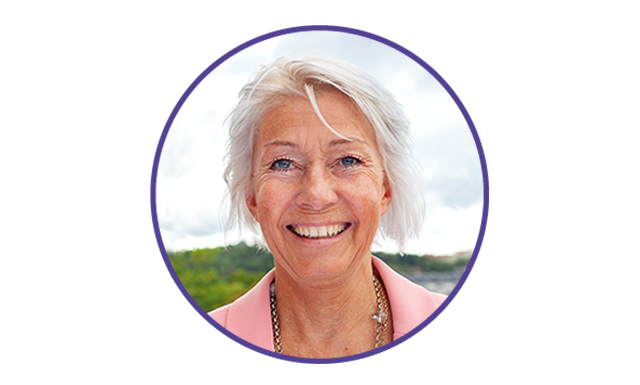
The process usually moves faster when researchers contact us at an early stage.
Around thirty of Sweden's National Quality Registers are run by Region Västra Götaland. The registers cover a wide range of topics, Ulrika Frithiofsson explains.
"They include everything from dental surgery and hip and knee replacements, to breast implants and a number of psychiatric registers. One of our largest registers is the National Diabetes Register."
The reason these particular registers ended up in Västra Götaland is usually because they were started by researchers/clinicians in the region, she explains. Gradually, they have grown from individual projects into national concerns.
Fast processing – but cross-referencing can take time
When researchers want to use data from one of these quality registers, the application ends up on Ulrika's desk and is subject to a confidentiality assessment within a few weeks. After approval, a little more time is needed to produce and deliver the requested data, Ulrika explains.
“We think we work quite efficient; it usually takes 1–2 months from start to finish for cases that only concern our registers. But if our data also needs to be cross-referenced with data from other sources, it can take considerably longer. About eight or nine months instead. The processing times at other public agencies are beyond our control."
Decisions to reject applications can be appealed. However, out of around 350 applications per year, only a few are rejected. In many more cases, researchers need to revise their applications before they can receive approval.
Common obstacles in applications – and how to avoid them
"There are various reasons why we cannot approve an application immediately. Sometimes it is because researchers request more data than is actually needed. They may want access to an entire register, even though only a few of the variables are necessary for the project they are going to carry out. In such cases, the application may need to be adjusted."
Another type of error is formal mistakes. For example, a researcher may apply as an employee of employer A but provide the email address of employer B, or the information may not match what is stated in the application for ethical review.
"Unfortunately, we cannot approve such applications. However, formal errors are often easy to correct."
Other types of changes require more work.
Researchers often find it easier to describe what data they want to obtain than how the data will be managed within the project.
“It can be difficult for us to determine from the application who should send the data to whom, what cross-references should be made or where code keys should be stored. But this is necessary information for us to be able to make our assessment."
Before the Centre of Registers Västra Götaland makes a decision on an application, it must receive approval from the Swedish Ethical Review Authority. Sometimes, the researchers' dialogue with the Centre of Registers Västra Götaland means that the project changes so much that an amendment application to the Swedish Ethical Review Authority is required. To avoid ending up in that situation, Ulrika believes it is a good idea for researchers to make initial contact with the Centre of Registers very early in the process.
“It is best to contact us early in the planning stage. Our statisticians and register holders can often provide useful input. ‘OK, if you’re going to look at that, then it would probably be a good idea to also request...’”
For researchers, it is of course a great advantage to make these kinds of changes before submitting their application for ethical review, so that it does not need to be redone.
“Yes, because it saves us time in the long run. The earlier we get involved, the less work is usually required later in the process to solve various problems.“
The organisation receives some funding from the region, but is largely funded by its customers, i.e. the researchers.
“We need to be in demand so that we can maintain a critical mass of experts. We have around 35 employees, including statisticians, project leaders, system administrators, IT configurators and more.
Order and efficiency with centralised management
The Centre of Registers Västra Götaland has been handling applications for the disclosure of data from the region's quality registers since 2018. Before that, researchers sent their applications directly to the register holder, i.e. an individual clinic/researcher.
“Some register holders were unsure about the regulations and did not feel confident carrying out confidentiality assessments. Some chose to approve applications as a general rule, while others chose to reject them or to consistently reject applications from competing research teams. Of course, that’s not how it should be done.“
When the processing was to be centralised, both researchers and register holders were sceptical, she recalls.
“It was perceived as increased, unnecessary bureaucracy when we took over, and many were probably worried that we would sit on the data and mostly reject applications. But our aim is to make as much data as possible available, in a legally compliant manner. Today, we receive a lot of positive feedback; people think we are well organised. Which is not surprising. We have a large volume of cases, and you become proficient through experience .“
The Centre of Registers Västra Götaland has also created various types of digital infrastructure for register-based research. One example is new functions for register-based randomised clinical trials (R-RCT). Ulrika Frithiofsson lights up when the subject comes up.
“It's pretty cool! When a clinician enters information about their patient during a consultation, a box can immediately pop up saying, ‘This patient would be suitable for this ongoing study.’ If the patient agrees, randomisation and inclusion in the study can take place immediately. Synchronising healthcare and research in this way is incredibly cost-effective. This is already being used extensively in research on fractures, among other things, and I hope that other areas will follow suit.“
Ulrika would like to see the Centre of Registers Västra Götaland offer more statistical support.
“I would like us to not only deliver data but also help researchers process that data. It is beneficial for both research and our statisticians when they are involved in the projects, but unfortunately there is not enough time.“
There is a severe shortage of senior statisticians. However, one thing that is about to improve is the application process itself, she explains.
"There are around 15 public agencies in the region that have different types of register data and other health data, and until now you have had to apply to each one individually. We can provide access to data from the quality registries we manage. If you need medical records, however, you will need to contact the relevant hospital, as each hospital is a separate public authority.
In a project involving data from many public agencies, this becomes quite burdensome for researchers. But now we are in the process of introducing a common digital application system, where researchers can order health data from all the region's public agencies at the same time, just like in an online store. At the end of 2024, we will launch a limited pilot, and in 2025 we hope to introduce the entire system in the region."
Text: Anders Nilsson
The interviews on Dataguiden are independent of the website's other knowledge support regarding the research data cycle and reflect the experiences and perspectives of the interviewees.
Publicerat den
Uppdaterat den