

Nordic data to solve health mysteries
Epidemiologist Unnur Valdimarsdóttir works both in Iceland and Sweden. She uses Nordic registry and health data to study links between mental and physical ill health.
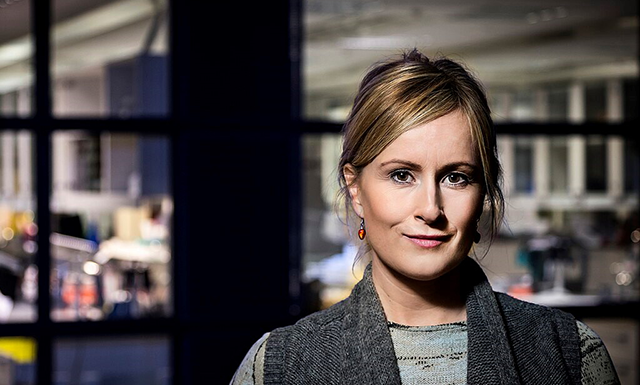
Conducting research in international projects brings access to more data and more sharp minds to collaborate with, and it also makes the work more enjoyable.
Icelandic Unnur Valdimarsdóttir has a keen interest in Swedish health registers. Today, she is a professor and dean at the University of Iceland in Reykjavík, but she completed her doctorate at Karolinska Institutet and is now a visiting researcher there. She considers Stockholm her second home, but what brought her to Sweden in the first place had nothing to do with register-based research.
"My boyfriend, now my husband, got a job in Sweden. He played football for Hammarby. I had finished my psychology degree in Iceland and didn’t really know what to do next. It seemed like a good idea to go with him, she explains."
She started working at Karolinska Institutet, which quickly led to a doctoral position that became the start of a research career focusing on psychosomatic links. What happens to our mental health when we are exposed to physical illness or trauma? And conversely, how does mental stress contribute to the development of physical illness, such as autoimmune diseases? In recent years, she has also been researching long-term symptoms after COVID infection, known as post-COVID, together with European colleagues.
Nordic registers – a competitive advantage
"Registers and cohorts are at the very heart of our research. When I started working outside Sweden as a junior researcher, I realised what a competitive advantage our Nordic registers are. Clinical studies can be conducted in many places, but detailed follow-ups over several decades on a large population – there are not many others in the world who can do that. If we include the whole Nordic region, that's 28 million people, says Unnur Valdimarsdóttir."
When she conducts studies using data from several countries, she does so in collaboration with researchers in each country. Separate national analyses are usually conducted and then compiled in a meta-analysis. It is a process that requires careful collaboration, harmonisation of data and a detailed analysis plan.
"But there have been occasions when we have obtained permission to combine all the data into a single set. We did this in a study on medicines and pregnancy, for example. Both the medicines and the complications we were interested in were unusual, so we needed the largest possible dataset to obtain sufficient statistical strength to be able to draw conclusions."
On that occasion, the analysis had to be carried out in Denmark, as it is prohibited to send Danish data abroad. The Nordic countries are quite similar in terms of how registers are maintained, but not identical, she establishes. Sweden is generally best in class. Iceland has a much smaller population, around 400 000 inhabitants in total, but compensates for this in other ways.
"Iceland’s strength is the richness of its data, that can be used for in-depth understanding. This applies to both genetics and other areas. We have been good at starting cohorts that follow people over a long period of time based on different questions," she says.
She herself has assembled a cohort of women who have been exposed to certain types of trauma that are rarely recorded in health registers. These include domestic violence, which often only leaves a mark in registers if the violence has led to healthcare/hospitalisation. Together with other sources, it can shed light on how such events contribute to both mental and physical ill health over time.
It has been about a quarter of a century since Unnur was involved in requesting her first register data. The process was much the same then as it is today, but it has become a little smoother over the years, she says.
What have you learned about requesting data since then? She laughs.
"That it takes time."
Did you make any beginner’s mistakes early on?
"No, I always had good mentors who guided me. Now I try to do the same with the junior researchers around me. You can’t just leave it up to them to choose and request data on their own. But they should be involved in the process and learn how it works."
So you haven’t regretted missing out on requesting something important?
"Yes, but that’s not a beginner’s mistake; things like that continue to happen. It’s impossible to foresee everything when planning a study. But I hope you get a little better at it. In those situations, you simply have to weigh up the benefits against the costs and time involved,” establishes Unnur. “How important is the desired data for the analysis, and how much of a setback would it be to the study to add it later on?"
International collaborations and lessons learnt from the pandemic
When COVID-19 struck in 2020, Unnur and some colleagues in Iceland, Sweden, Norway, Denmark, Estonia and the United Kingdom decided to study how the pandemic and restrictions affected public health over long term. Initially, much focus was on the impact of isolation on mental health, but early on, interest was also aroused in long-term symptoms after infection. Today, Post-COVID syndrome is the major research question for the group.
"A great many symptoms have been reported in Post-COVID syndrome. We are trying to understand what this actually is. Which symptoms are overrepresented and which people are at risk of being affected? Even though we were unable to meet for a couple of years, we have established a strong collaboration. There is a good balance between joint work on the project and each group being creative and asking new questions of their data, either on their own or in collaboration with others. The project combines register data with cohorts in the different countries, covering nearly half a million people. Biobank samples are also included in the research."
"At the beginning of the pandemic, the focus was entirely on saving lives in the short term. Now we see that many people were so seriously and long-term affected afterwards that they are unable to work, for example. This is a perspective that we should keep in mind from the outset in the next pandemic."
Unnur Valdimarsdóttir has built up her network of contacts in other countries over the years through various projects, scientific conferences and invitations to serve as an opponent at doctoral defences. If both research interests and personal chemistry match, it is easy to stay in touch.
Are larger datasets or more sharp minds the most important advantage of working together in international collaborations?
"Both are important, but above all, it’s much more fun!"
Text: Anders Nilsson
The interviews on Dataguiden are independent of the website's other knowledge support regarding the research data cycle and reflect the experiences and perspectives of the interviewees.
Publicerat den
Uppdaterat den