

Registry data for research – rules, fees and misconceptions
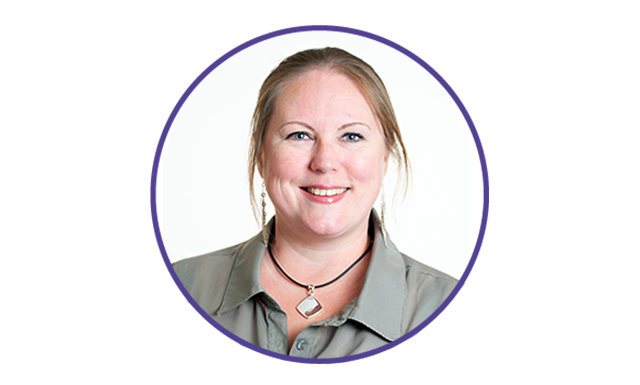
Karin Björling is a coordinator at Region Dalarna and handles around 50 applications for register data each year – nearly all of which are approved. Experienced researchers are often well versed in the regulations, but among younger and more inexperienced researchers, there are various misconceptions.
Fees will benefit all parties when we can charge for our services. The region need not divert resources from clinical care as our operations expand, and we can provide researchers with better and faster service.
Until autumn 2024, it has been free for researchers to request register data from Region Dalarna. But in the future, there will be a fee, which is in the best interests of research, explains Karin Björling, coordinator at Region Dalarna's R&D unit.
"The decision to introduce fees has already been made, and we are now working on the administrative aspects. It will be beneficial for all parties when we can collect fees. The region will not need to divert resources from clinical activities if our operations grow, and we will be able to provide researchers with better and faster service," she says.
Karin Björling hopes that the fees will, among other things, finance a person who works with implementing the disclosure of data.
"We have the resources to process applications and make decisions, but not for the practical work of compiling the requested data and disclosing it. This is often quite a big task. Someone else in the region, such as the IT department, has to help us with this."
Region Dalarna receives around 50 applications per year from researchers who want to use the region's register data. Most of these relate to medical data from healthcare, but there are a few other topics.
"We have had researchers who wanted information from the region’s personnel register or data from healthcare that did not relate to medicine but to economics. Another possible topic is public transport, as this is an important activity for the region, but I recall no such cases."
All researchers' applications end up with Karin, regardless of which of the region's registers they concern.
"Yes, as long as it involves the disclosure of personal data for research purposes. This may include data from active medical record systems, medical record data in intermediate archives, X-ray systems, laboratory systems, drug systems, and more."
Common misunderstandings when data is requested
Researchers can only request data after the Swedish Ethical Review Authority has given its consent to the research. But approved ethical review does not automatically mean that the region must release the data, explains Karin.
"It's a common misunderstanding. I encounter it at least once a month: ‘We wrote in our ethical review that we should have electronic access to the medical records system, and approval was granted. So that settles it.’ No, it does not. The Swedish Ethical Review Authority reviews based on its criteria, and we review based on ours."
Her best advice to researchers who want to request register data is to get in touch as early as possible.
"We are happy when they contact us and say, ‘We are planning this study, how would it work? ‘ Then we can look at data flows in their proposal and say, 'We think it would be better to solve this particular part in a different way, otherwise it will be unnecessarily complicated."
She gives the example of a questionnaire that was to be integrated as a small part of a larger project. The researchers' plan was for patients to fill in the questionnaire on paper when they were recruited for the study at a healthcare appointment.
"The idea was then for the clinic to send the questionnaire responses with personal identity numbers to the research team. But then the region becomes responsible for personal data, and the data must be disclosed after secrecy and harm assessments. We explained that if the participants instead entered their answers digitally into a system belonging to the university, the data would not need to pass through the region but would go directly to the researchers. This would save both parties from having to deal with disclosure."
A common misconception is that researchers can obtain lists of personal identification numbers from healthcare providers for the purpose of calculating numbers – for instance, during early project planning and looking for potential study participants. This is not possible, emphasises Karin Björling. The only information that the clinic can disclose without permission is the number of patients in a certain category.
Another common misunderstanding is that no special permission is required if someone in the project already has access to the data through their clinical work. But just because you are authorised to use the medical records system in your clinical practice does not mean that you are automatically authorised to do so as a researcher. There is a distinction between confidentiality duties between healthcare and research . Experienced researchers are often well aware of this, she emphasises. Many return with new applications year after year and are very familiar with the regulations. But every year, of course, new, more inexperienced researchers also write their first applications.
"Doctoral studies should be education under supervision. In my experience, the results of applications are much better when we can have a dialogue with both the doctoral student and the supervisor on these issues. Not primarily for our sake, but for theirs."
Unusual to be rejected
Almost all cases ultimately result in approval and disclosure of data, she says.
"Rejections are rare for us. There are no direct restrictions on what data we can disclose, so almost everything can be resolved in dialogue with the researchers. We must ensure that registered individuals do not suffer any harm. Basically, it is a matter of weighing the amount of data and how sensitive it is against the protective measures taken."
Something that falls outside Karin Björling's area of responsibility is biobank material.
"Health data registers and biobanks are governed by different legislation and are therefore handled in two separate processes, each requiring its own application. But my colleague, who is the biobank coordinator, and I are in close contact and work well together. It is a fantastic advantage for Swedish research that we not only have good registers, but that they can also be linked to biobank samples. We want it to work smoothly for researchers."
How could support for registry researchers be improved?
"What would really make a difference is better data storage, i.e. how registry data is structured. It is a major challenge for us that the data researchers are looking for is often in free text, such as medical records in PDFs."
Many of the region's registers, such as medical record archives, were not created with the intention of making it easy to retrieve information, but rather to ensure that the information is well protected, she explains.
"These are diametrically opposed perspectives, which means that compiling data can take a very long time for us. This, in turn, means longer waiting times for researchers. But restructuring the storage requires resources. I believe we need to collaborate at the national level to develop solutions."
Text: Anders Nilsson
Feasibility counts in clinical research – what does this mean in practice?
Feasibility counts involve healthcare providers or register holders, upon request prior to planned clinical research, determining how many people meet pre-specified inclusion/exclusion criteria. The purpose is to assess whether the recruitment base is sufficient and where it is located. The result is only provided as a number or range – no personal data or lists of individuals are disclosed.
How it works
- The researchers specify the criteria and send a request to the relevant region/healthcare provider or register holder.
- The healthcare provider or register holder carries out the calculation and provides information on the number (or range) of matches.
- The outcome is used for feasibility (study requests) and site planning. If the project proceeds, the usual approvals and processes for the disclosure of individual data are required.
Examples of when feasibility assessments prove especially useful
When planning a multicentre study for a rare diagnosis, feasibility counts in several regions can show where there are enough patients to meet recruitment targets and how many centres are needed.
Related links
The interviews on Dataguiden are independent of the website's other knowledge support regarding the research data cycle and reflect the experiences and perspectives of the interviewees.
Publicerat den
Uppdaterat den