

SCAPIS – en av Sveriges största källor till hälsodata för forskning
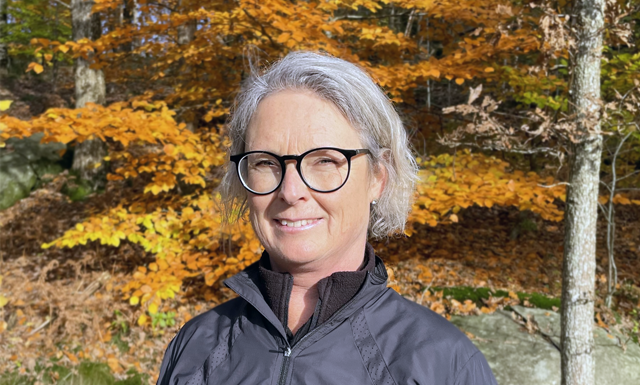
The SCAPIS study, with 30,000 participants, has become one of the major providers of health data to researchers in Sweden. Project Coordinator Louise Rundqvist is preparing for even greater interest once the first major follow-up, SCAPIS 2, is completed.
SCAPIS is the most extensive data collection of its kind in the world, and it has also been carried out using modern technology. Other large studies in this field are now quite rather old and were conducted using the tools available at the time.
SCAPIS (Swedish CArdioPulmonary bioImage Study) is a large-scale Swedish research initiative on heart, vascular and lung disease. The study is run jointly by six university hospitals, which together have collected health data for from 30,000 randomly selected individuals aged 50-64. The main funder is the Swedish Heart-Lung Foundation.
Many research groups are involved in the collaboration, but the SCAPIS cohort has also attracted researchers outside the SCAPIS collaboration because of its size and level of detail. Each week, SCAPIS Project Coordinator Louise Rundqvist reviews new applications for data for various research projects.
The first round of data collection for SCAPIS took place from 2013 to 2018. It includes data from a wide range of clinical examinations and biological sampling, including genetic analyses as well as questionnaire responses on lifestyle factors such as diet and physical exercise. Everyday physical activity has also been measured using an accelerometer.
In addition, SCAPIS contains an extensive set of images from computed tomography and ultrasound. For each study participant, there are around 2,500 stored images, primarily of the lungs and blood vessels but also of other organs. According to Rundqvist, the breadth of the material is what primarily distinguishes SCAPIS from studies based on ordinary health registers. At the same time, it places demands on the users.
“It can be difficult to narrow things down and determine which variables are most relevant when there are more than a thousand to choose from,” she says.
Since external researchers were first given the possibility to apply for access to SCAPIS data in 2021, interest has increased every year. Last year, 67 applications were received, almost all of which were approved. This makes SCAPIS one of the country’s largest providers of health data for research.
The fact that rejections are rare does not mean that all research groups submit realistic requests from the outset. Rather, it reflects the dialogue between researchers and SCAPIS that usually precedes a formal application, Rundqvist explains. This dialogue allows uncertainties to be clarified and expectations to be adjusted so that the application can be approved at the first attempt.
There are a number of requirements that applicants must meet, she emphasises. First and foremost, the planned research must be consistent with the cohort’s overall focus on heart, vascular and lung disease. At the same time, it should avoid directly overlapping with certain research already taking place under way within SCAPIS. Research using the cohort’s extensive image material is expected to contribute to the development of methods and new variables. Only in exceptional cases is additional data collection from study participants permitted.
“These requests are assessed on a case-by-case basis, depending on the expected benefits, but we are quite restrictive,” she says. “It is important not to trouble burden our participants unnecessarily. We do not want to risk them growing tired and declining to take part in future rounds.”
Another condition is that SCAPIS only releases data to researchers at Swedish institutions. However, these researchers may collaborate with colleagues in other countries and use the data in joint projects.
“Sharing health data across national borders is not easy to resolve from a legal point of view ,” says Rundqvist. “We have so much valuable material that there simply are not enough researchers in Sweden to explore it all. It will be interesting to see whether this may changes in the future.”
It sometimes happens that researchers apply for data that are not yet available. In some cases, collection and compilation have simply not been completed. In others, the data exist but are initially not shared with external users.
“There are many sub-studies where researchers within SCAPIS have carried out additional data collection for part of the cohort,” Rundqvist explains. “It is reasonable that they have priority access to their own data, but only for a limited time, often a couple of years.”
When medical images are to be used for research, they often need to be translated into variables that can be processed statistically, for example, an anatomical distance measured in millimetres or the proportion of a certain tissue or cell type expressed as a percentage. When researchers are given access to computed tomography and ultrasound images from SCAPIS, they also commit to sharing any new variables they derive. In this way, users help to increase the usefulness of the database over time.
“We release the material in two stages,” says Rundqvist. “First, the researchers receive the images. Once they have reviewed them and created and submitted their new variables to us, we release the rest of the material.” From a technical point of view, receiving these datasets from users is not difficult. The challenge is rather to obtain descriptions of the new variables that are well thought through, clear and precise, so that other researchers can understand and use them, she notes.
Applications for SCAPIS data are submitted via a detailed form. The advantages of a standardised application form is that all necessary information is always included and that the structure makes it easy to locate and assess information during processing, Rundqvist explains. This streamlines the approval process.
Comprehensive PDF instructions are available to support applicants, both for the application to SCAPIS and for the application that must first be submitted to the Swedish Ethical Review Authority.
Even so, researchers sometimes make mistakes in their applications. Some are easily corrected, such as when the EPM approval has not been attached and needs to be sent in submitted afterwards. In other cases, errors cause both delays and additional costs. Rundqvist particularly urges all applicants to verify that they have included all the variables they need and that they have chosen the appropriate type of ID number for the data delivery.
“SCAPIS never releases personal identity numbers. As a standard, we replace them with a randomly assigned serial number. That works in most cases, but not if the researchers intend to link our data with other material they have,” she explains.
When datasets from different sources are to be linked, one of the data providers must instead prepare a linking key in advance, she continues. Using this key, a given personal identity number can be replaced with the same ID in all datasets that the researchers plan to use. However, such a solution cannot be introduced retrospectively into data that have already been released with the wrong type of ID. In that situation, the entire process has to be repeated, starting with a new application. The same applies when researchers discover that they omitted a variable from their application.
“We cannot release anything at all without an application and a decision,” says Rundqvist. “Not even if it is just a single variable that is missing.”
The time from receipt of an application to delivery of data is usually three to four weeks, provided that the project concerns only SCAPIS’s own material. Projects that involve linkage with other datasets require collaboration with the organisation or organisations providing those datasets and therefore depend on the waiting times at those bodies. The other party, often a major register holder such as the National Board of Health and Welfare or Statistics Sweden, generally performs the technical linkage.
SCAPIS data are stored in separate parts for both technical and organisational reasons. However, the applicant does not notice this, Rundqvist assures. Everything is covered within the same application. The only exception would be if someone applied for access to SCAPIS’s biological samples stored in biobanks. Those would have to be handled through a special procedure, something that has not yet happened.
“Some researchers have inquired but then withdrawn their interest once they saw the costs,” she says. “Handling at least 30,000 biological samples quickly becomes expensive.”
Today, a decade after the first SCAPIS data collection, the first major follow-up examination of participants is underway, called SCAPIS 2. Here, technological development has moved another step forward. Rundqvist smiles as she explains that computed tomography images are now acquired using photon-counting detectors, a higher-resolution technology introduced only in recent years and still available at only a few sites in Sweden.
“The first data collection gave us a baseline,” she says. “With SCAPIS 2, we can investigate what has happened within the cohort since then. It is a very important step for us and will likely increase external interest even further.”
SCAPIS expects data from SCAPIS 2 to be ready in autumn 2026, at which point they can begin to be shared with interested researchers.
Text: Anders Nilsson
Facts about SCAPIS
- SCAPIS is a study that investigates links between heart, vascular and lung disease. The aim is to provide knowledge that makes individual risk assessment and individual preventive treatment possible.
- First data collection: 2013-2018
- Partners: The university hospitals in Malmö, Gothenburg, Linköping, Stockholm, Uppsala and Umeå. The Swedish Heart-Lung Foundation is the main funder.
- Fees for external users: SEK 6,000 in application fee and from SEK 45,000 for data delivery.
The interviews on Dataguiden are independent of the website's other knowledge support regarding the research data cycle and reflect the experiences and perspectives of the interviewees.
Publicerat den
Uppdaterat den