

The epidemiologist using dog registries in health research
Epidemiologist Tove Fall and her colleagues were the first in the world to link dog registries with health data on dog owners. She knows just how unique Sweden's public agency registries are – and how the personal identity numbers open up for more unexpected data sources.
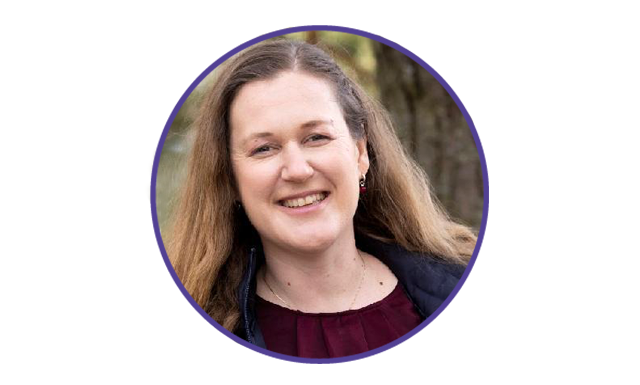
Photo: Mikael Wallersted, Source: uu.se
“There are many unique opportunities in Swedish register-based research.“
Tove Fall, professor of molecular epidemiology at Uppsala University, uses registry data in almost all of her studies. Her research examines risk factors and causes of diabetes and cardiovascular disease, among other things. She often base her work on cohort studies: population studies of a group of people who are followed over time and have provided various types of samples for research.
To find answers to various questions, such as how antibiotic use can have long-term effects on the gut microbiome, information from analyses of the research subjects' samples is cross-referenced with a number of public agency registers, for example the National Prescribed Drug Register, the National Patient Register, and Statistics Sweden’s LISA database.
“Such registers offer excellent opportunities to follow people over time. Since the information is available in the registers, we don’t have to worry that people won’t respond if we contact them after ten years. And if there are drop-outs in the studies where we collect samples, we can carry out drop-out analyses.
”This allows us to keep track of missing participants and adapt the analyses accordingly,” she says.
As an experienced register-based researcher, Tove is well acquainted with all the time-consuming steps and challenges involved in obtaining accessible data.
“Everything takes time! Planning, ethical approval, being assigned a case officer at the registry-holding organisation, review by lawyers and finding secure technical solutions for both storing and analysing data. The longest process in any registry project is everything that happens before you get the data “in hand” – but then the real fun begins,“ she says.
Unconventional data sources create new opportunities
Tove has used pseudonymised registry extracts from several national government registries in Sweden for her research, but she also has experience of searching for data in more unexpected places. With a background in veterinary medicine, she previously conducted researched on diabetes in dogs. During this period, she met many dog owners who shared stories about their lives and how their dogs affected their well-being. Their stories inspired her and sparked a new idea: is it possible to conduct interesting research by linking dog registers with health data?
“How humans are affected by having animals has been studied very little. Since we have many animal registries in Sweden that contain the owners’ personal identity numbers, it may be possible to use these less traditional data sources to investigate this area,” she says.
Since then, a total of eight studies have examined the link between pet ownership and health. In the first, published in 2015, she investigated how children's risk of developing allergies is affected by having a dog in the family.
The research was made possible by the fact that, since 2001, it has been a legal requirement for all dogs in Sweden to be microchipped and registered with their owners. The Swedish Board of Agriculture are responsible for the comprehensive register, which contains information on everything from breed and owner to the most common dog names.
“This register was not actually created for research purposes. But it is a government register and can be used for research if, as with all register studies, you can justify the purpose and undergo an ethical review,“ she says.
The main analysis included approximately one million children born between 2001 and 2010, both with and without dogs living in their homes. To obtain the information required for the study, the dog registry owner data was cross-referenced with several population and health registries.
In particular, the National Prescribed Drug Register was used to identify parents who had obtained asthma medication for their children. The researchers then assessed whether there were differences between dog-owning and non-dog-owning families.
“As far as I know, this was the first time in the world that a cross-reference between dog registers and human health registers was made,“ she says.
The results of the study attracted a lot of attention, as it showed that the risk of schoolchildren developing asthma is 13 per cent lower if they have grown up with a dog – even when taking into account any allergies in the family.
Transparency and research benefits key to all registers
In addition to the Swedish Board of Agriculture's dog register, Tove also used the Kennel Club's register, where pedigree dogs are registered together with their owners. Even in this case, where the register holder was a non-profit organisation and not a public agency, ethical approval was required and the register holder had to review her request for register extracts.
"In all projects where you want to analyse register data, it is important to be completely transparent with the Swedish Ethical Review Authority and the register-keeping organisation about what you want to do, what the purpose is and what risks may exist. The register-holding organisation can, of course, oppose the request and, under certain circumstances, may not disclose the data material. But I have always been granted access when I have been able to demonstrate the benefits of the research and how the data will be handled securely. The risks associated with data management are minimised by the fact that the data we get access to is pseudonymised, usually by Statistics Sweden,“ she says.
Important to understand the non-traditional registers
In another study, Tove and her research team were able to show that the risk of people living alone suffering from cardiovascular disease is reduced if they are dog owners. Here too, data from the dog registers was cross-referenced with various population and health registers to obtain the results.
Tove has also used data from a private insurance company in her research. In the study, she wanted to examine whether there is a connection between the health of dog owners and the health of their dogs, with a focus on diabetes. To obtain the results, Tove and her colleague Beatrice Kennedy analysed information from Agria, a large animal insurance company. SCB cross-referenced the insurance company's data on dogs with diabetes against population registers and various health registers. This enabled the research team to analyse pseudonymised data on the health of dogs and their owners. The study yielded an interesting result.
"The research showed that owners of dogs with diabetes had a higher risk of developing diabetes themselves. This may be due to shared risk factors, such as less exercise or living in a stressful environment,“ she says, continuing.
“These studies show that many valuable data sources exist outside public sector, and can be linked to more traditional registers once ethical approval has been obtained.”
Simultaneously, she emphasises that registers that do not come from public agencies can pose a number of challenges that need to be taken into account.
“Public agency registers are often very “well organised”. Many people have researched them before, so there is a lot of information and experience about how they can be used. This is not the case with new or less traditional registers. Therefore, an important part of the research process is to understand the information in these registers. For example how they are structured, what the different variables mean and how they have been developed.“
Sweden is a good country for register-based research
Tove was previously a member of the Young Academy of Sweden and is one of the authors of the book ‘Forskardrömmar’ (Researcher Dreams), which tells the stories of children who later became researchers. She believes it is important to encourage young people's interest in science and show that there are many paths into research.
"It is important for young people to understand that researchers are not just old men in white lab coats, but that there are many different types of research. Sweden is a very good country to be a researcher in, not least because there are so many fantastic registers and data sources. I think register-based research is really fun! Perhaps my studies linking animals to human health can inspire and spark young people's curiosity about research," she concludes.
Text: Ulrika Ernström
Tove's tips on public agency registers
- National Prescribed Drug Register. Contains all medicines dispensed on prescription at pharmacies. Register holder: The National Board of Health and Welfare.
- National Patient Register. Contains information on patients who have been treated in inpatient healthcare and in specialised outpatient care. Register holder: The National Board of Health and Welfare.
- National Cause of Death Register. Contains information about all deaths that have occurred in Sweden. Register holder: National Board of Health and Welfare.
- National Vaccination Register. Used to monitor the effect of national vaccination programmes and COVID-19 vaccinations. There is also a register of certain infectious diseases and notifiable diseases, SmiNet. Register holder: Public Health Agency of Sweden.
- National Population Register (RTB). A register of the population, including information on date of birth, gender and population registration. Register holder: Statistics Sweden.
- Multi-Generation Register. Part of the RTB, containing information on individuals' parents, siblings and children.
- The LISA Register. Integrates data on the Population with information on education, employment, income, unemployment, and health and parental insurance. Register holder: Statistics Sweden.
The interviews on Dataguiden are independent of the website's other knowledge support regarding the research data cycle and reflect the experiences and perspectives of the interviewees.
Publicerat den
Uppdaterat den